TorresDelPaine.com
 Muelle Prat and the Fishermen’s Pier, Puerto Natales
-
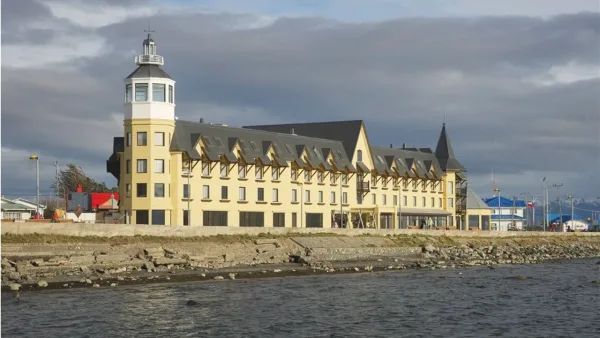
Boat terminal
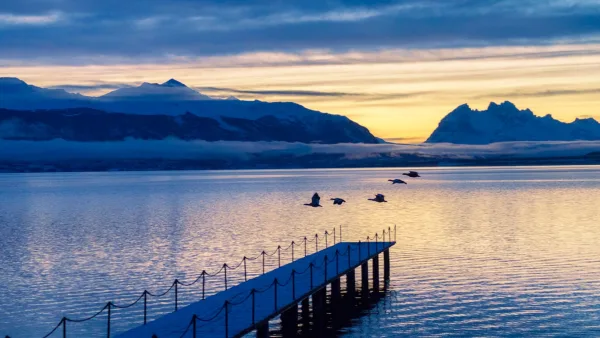
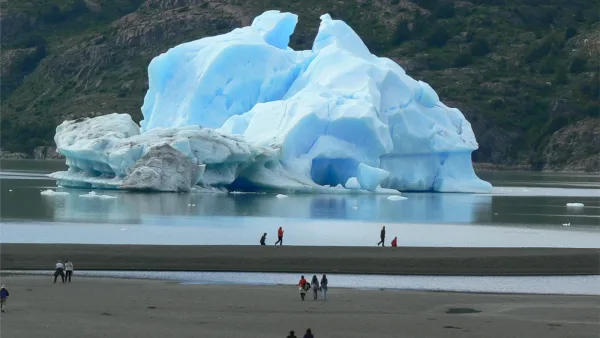
There are places you don't visit: you pass through them. Muelle Prat, managed by Empresa Portuaria Austral (EPA), is exactly that for anyone traveling to Torres del Paine. It's the edge where Puerto Natales ends and the water of Seno Última Esperanza begins, the fjord that Juan Ladrillero sailed in the 16th century looking for a way out to the Pacific, and which left this area its melancholic name — Last Hope. From here the boats set off toward the Balmaceda and Serrano glaciers, and here is where they return late in the afternoon.
Where it is and how it connects with your route
The pier sits along Costanera Pedro Montt, right in Puerto Natales, a few blocks from the center and from most of the lodgings. You can walk there. That makes it a natural stop for the day before or after Torres del Paine, when your logistics are already sorted and you have free time in town. The park is about two hours north via Route Y-290; the pier is the door that looks in the opposite direction, toward the fjords and the ice fields.
What you see from the water's edge
The water of the sound is still, a shade of gray that shifts with the hour. Straight ahead, the outline of the hills on the far side of the fjord; to the north, the entrance to the channels that lead to Balmaceda. Along the shore, black-necked swans, cormorants and black-faced ibises that stand around unhurried, close to people. When the wind drops, the reflection of the mountains on the water is the photograph almost every traveler takes home from Natales.
The fishermen's pier
A few steps from the main landing is the artisanal fishing area: wooden walkways, brightly painted boats tied up, nets drying and workers whose families have been pulling king crab and southern hake out of these channels for generations. This is the Natales that came before tourism, the same one that lived off livestock and the meat-packing plants. If you're drawn to documentary photography, or simply want to understand what this city lives on, half an hour here says more than a museum.
How much time to give it
As a walk in itself, 30 to 60 minutes is enough to cover the pier, the fishing sector and a stretch of the waterfront. If your plan is the half-day sailing to Balmaceda and Serrano, boarding is usually in the morning and it's worth arriving early; schedules change according to the season and the operator, so confirm them the day before.
When to go and what to bring
- Season: between October and April boat traffic is daily and the light stretches out very late in December and January. In winter the waterfront stays open and walkable, but with fewer sailings and short days.
- Wind: it's the main character in Magallanes. Windbreaker, layers and a hat, even in summer.
- Light: sunrise and sunset are the most rewarding moments for photography. In summer that can mean before 6 in the morning and after 10 at night.
- Footing: the wooden walkways get slippery with rain or frost. Bring shoes with grip.
Map