TorresDelPaine.com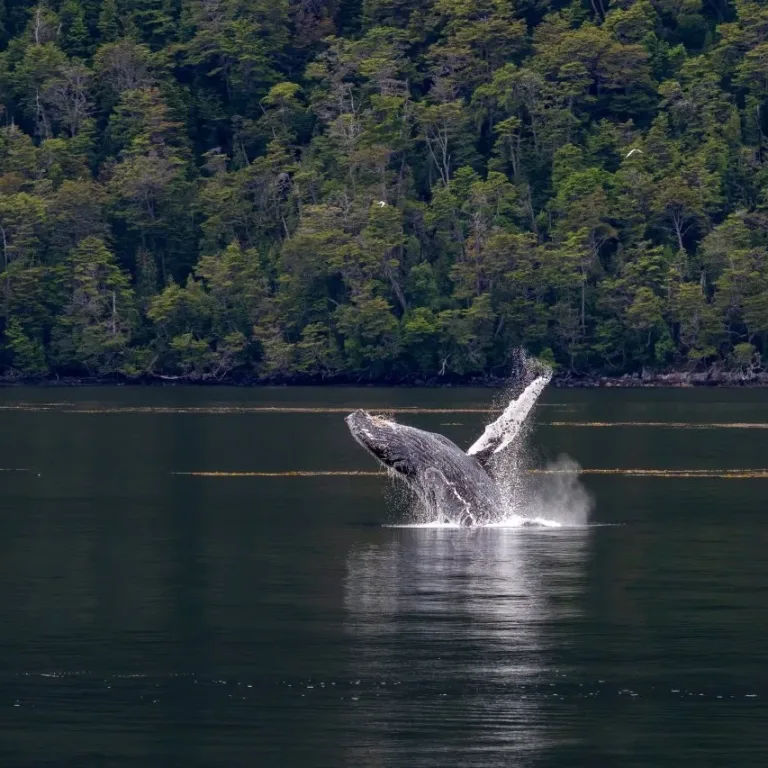
In the far south of Magallanes, where the Pacific and the Atlantic blur together among channels, glaciers and winds that never let up, lies Chile's first marine park. The Francisco Coloane Marine Park is named after the writer who set his stories in these cold seas, and it was created with a very concrete purpose: to protect the area where the humpback whale feeds.
You don't come here to walk trails or photograph mountains. You come to navigate and to wait for the moment when a humpback breaks the surface. The park covers close to 1,500 hectares of sea and coastline between Carlos III Island, the Santa Inés and Riesco islands and the Brunswick Peninsula, in the comuna of Punta Arenas. The meeting of two oceans, the glaciers and the fragmented coastline create an oceanographic setting found nowhere else on the planet.
Why you come: the whales
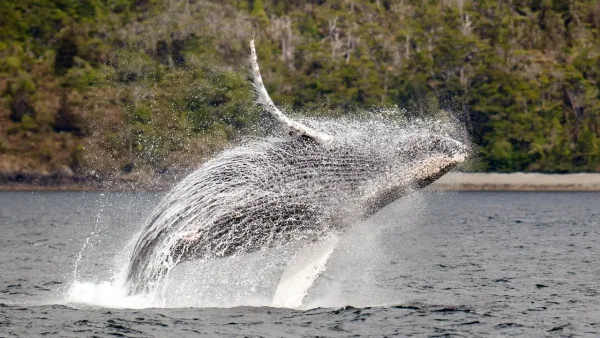
The humpback is the star. During the austral summer it finds an abundant feeding ground in these waters, and that's when sightings concentrate. Watching it emerge, blow and slap its tail against the water in the middle of this landscape is the whole reason for the visit.
But the humpback doesn't come alone. These waters are home to the orca, the sei whale, the Antarctic minke, the fin whale and the southern right whale, along with the South American fur seal and the southern river otter. On the rocks and islets, the colony of Magellanic penguins and the sea lions complete the picture.
The sky and the coast
While you navigate, the air is alive too. Overhead glide the black-browed albatross, the imperial cormorant, the Chilean skua and the South American tern. Along the shoreline appear the kelp goose, the flightless steamer duck and the kingfisher, and among the forests hide the black woodpecker and the white-throated treerunner. With luck, a condor crosses the sky or glides alongside the sea lions.
How it fits into your trip
Access to the park is by sea, on sailings that depart from the Punta Arenas area during the summer season. The window for spotting the humpback concentrates between the austral summer and early autumn, so it's worth planning your visit within those months.
If your main route is Torres del Paine, this park works as a southern extension of the trip: a marine experience that complements the trekking among granite and lenga trees with days of navigation through channels and glaciers. It's a destination for contemplative travelers and nature lovers looking for something different, patient and deeply austral.
If you want to understand how to add this sailing to your itinerary through Magallanes, talk with our team and we'll put the route together with you.
Map